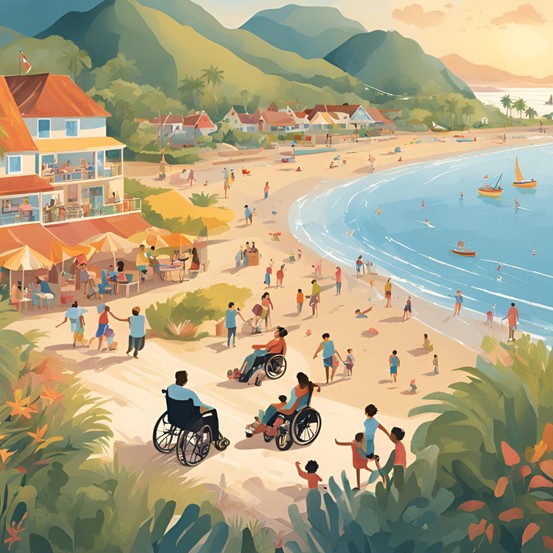
Overview:
The course aims to make learners more aware of the regulations and standards to be followed and adopted to ensure accessible tourism to all. To this end, it is, first of all, significant to know the different types of disabilities and the consequent condition of handicaps to implement hospitality accessibility processes, namely the social disadvantage resulting from the integration of a person with disabilities into society. Through the use of specific tools, it is possible to enable people with physical or intellectual disabilities to enjoy greater independence and security. Each person can contribute to significantly improving their quality of life and minimizing disability-related risks.
Main ideas:
- The right to self-determination: It is the ability or power to choose between various opportunities and to use those choices to determine one’s actions, making a personal choice.
- Accessible tourism: it refers to tourist facilities, products, and services for everybody, without any sort of barrier, in line with any responsible and sustainable tourism policy.
- Universalism: Whether related to aging, forms of disability, or temporary or permanent needs, having special needs (even temporary) is an intrinsic element of human experience.
- Ambiente: Contextual factors contribute to either positively or negatively modifying a person’s well-being. Everything can be “an environment” for someone, acting as either a barrier or a facilitator.
- Disability: The concept of disability is evolving; it is not a fixed notion, but can change depending on the environments that characterize different societies.
- Overcoming barriers: A destination can only be considered accessible if it meets certain requirements, adapting to the needs of everyone, without barriers that could hinder access to and the enjoyment of services..
Course Features
- Lectures 10
- Quizzes 2
- Duration 10 weeks
- Skill level All levels
- Language English
- Students 3
- Assessments Yes
- 3 Sections
- 10 Lessons
- 10 Weeks
Expand all sectionsCollapse all sections
- Accessibility Regulations and Standards in Tourism5
- Different types of disabilities and their related accessibility needs5
- To Learn Out More2